

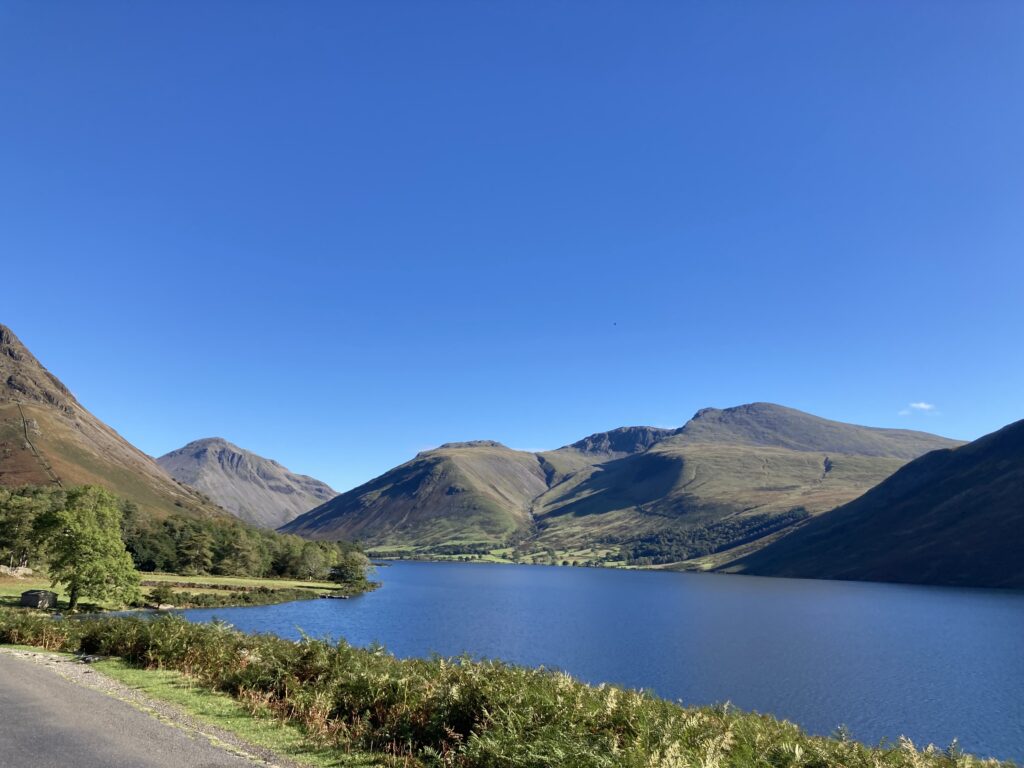
In 2024, West Lakeland Farmer-Led Nature Recovery CIC (WLCIC) was delighted to secure funding through the Natural Environment Investment Readiness Fund (NEIRF).
Working across the western Lake District, our project brought farmers and environmental organisations together to investigate how nature-based solutions could help tackle water-related challenges, while exploring new ways to fund nature recovery for the future.
Working with Nature to Tackle Water Challenges
Climate change is bringing increasing uncertainty around water availability, with greater pressure from both droughts and extreme rainfall. These challenges affect communities, businesses, industry and the natural environment, all of which depend on a reliable water supply.
Our upland catchments play an important role in the wider water system. What happens on the fells, farms and riverbanks can influence how water moves through the landscape and the conditions experienced further downstream.
Working alongside West Cumbria Rivers Trust, we explored how we could work with natural processes to help address some of these challenges. This meant looking at opportunities to slow water down, retain it within the landscape and allow it to be filtered naturally. Crucially, we weren’t looking at water in isolation. The opportunity was to deliver multiple benefits at once: improving water resilience, supporting wildlife and creating healthier, more resilient landscapes.
Turning Nature Recovery into Measurable Benefits
A key part of the project was understanding how we could measure the benefits of nature-based interventions and demonstrate their value to potential investors. To help us do this, we used Replenish, a Rivers Trust model designed to quantify volumetric water benefits — measuring the volume of water-related benefits generated by interventions, expressed in cubic metres per year. The approach aims to help businesses invest in projects that can mitigate water-related risks associated with their operations, while supporting local communities, the economy and the environment. Using standardised metrics and recognised methodologies, alongside independent verification and reporting, the model provides a framework for demonstrating the potential water benefits of individual projects.
This is important because potential investors need to understand what their money could achieve. Being able to quantify and report these benefits offers a clearer basis for investment decisions and creates a potential link between the environmental work farmers deliver on the ground and businesses with an interest in water security.
57 Opportunities for Nature Recovery
Through the project, we identified a range of potential interventions across the landscape, each offering opportunities to improve how water moves through and is retained within our upland catchments.
These included:
- Ponds and wetlands – creating areas where water can be stored and habitats can flourish.
- River and floodplain restoration – helping rivers function more naturally and reconnecting them with their surrounding landscapes.
- Peatland restoration – improving the condition of these important habitats and supporting their role in regulating water.
- Woodland and scrub creation – establishing trees and vegetation that can contribute to water management and provide valuable wildlife habitats.
Together, we identified 57 potential interventions, with the potential to create 245 hectares of new habitat and deliver more than 350,000 cubic metres of water-related benefits annually.
These figures represent the estimated potential of the interventions identified, rather than benefits already delivered. However, they demonstrate the scale of opportunity available across our catchments and provide a starting point for developing future projects.
The wider benefits could extend beyond water resilience, helping to improve habitat condition, support biodiversity and contribute to greater resilience against flooding and periods of dry weather.
From Potential Projects to Real Investment
Identifying opportunities is an important first step, but turning those ideas into action requires more than a map of potential interventions. We also need to demonstrate their value, develop credible projects and build relationships with businesses that may be willing to invest in nature-based solutions.
This has been one of the key lessons from our NEIRF project. Developing a pipeline of potential projects is essential, but securing investment is a separate challenge that takes time, engagement and a clear proposition. For a farmer-led organisation with limited time, money and resources, this can be particularly challenging. It requires strong partnerships, a shared understanding of the opportunities and a funding approach that works for both farmers and potential investors.
Nevertheless, the project has helped us take important steps forward. We’ve strengthened partnerships between farmers and environmental organisations, begun developing relationships with potential private investors and explored how investment could support practical nature recovery on the ground. Most importantly, we’ve continued to develop a collaborative, farmer-led approach that puts local knowledge and the people who manage the landscape at the heart of the process.
Building a Future Where Farming and Nature Thrive Together
The NEIRF project has helped us better understand the potential for nature-based solutions to deliver environmental benefits while exploring new ways to fund this work.
It has shown that our upland landscapes offer opportunities to address water challenges, create and improve habitats, and bring together organisations with shared environmental ambitions. There is still work to do to turn these opportunities into funded projects and measurable outcomes. However, we now have a clearer picture of what could be achieved and a stronger foundation on which to build. For WLCIC, this is about finding practical, long-term approaches to nature recovery that recognise the vital role of farmers in managing our uplands.
A huge thank you to West Cumbria Rivers Trust, Lake District National Park, The Environment Agency and The National Trust for their contributions to the project.
By working together, building partnerships and exploring new approaches to investment, we can help create a future where water resilience, nature recovery and traditional upland farming thrive side by side.